


How LATAM raised its operational efficiency by 30% with Enter’s technology
18,6k
US$ 2.8M
12 → 70%
18,6k
US$ 2.8M
18,6k
“Brazil accounts for 98% of LATAM’s litigation worldwide, making a handcrafted legal model expensive and inefficient. We use Enter’s artificial intelligence to elevate LATAM’s legal excellence at scale, significantly reducing costs.”


18,6k structured-text suggestions from Enter’s AI
US$2.9 million saved per year with support from Enter’s platform, through a 13% reduction in operating costs per lawsuit and a 30% rise in efficiency metrics
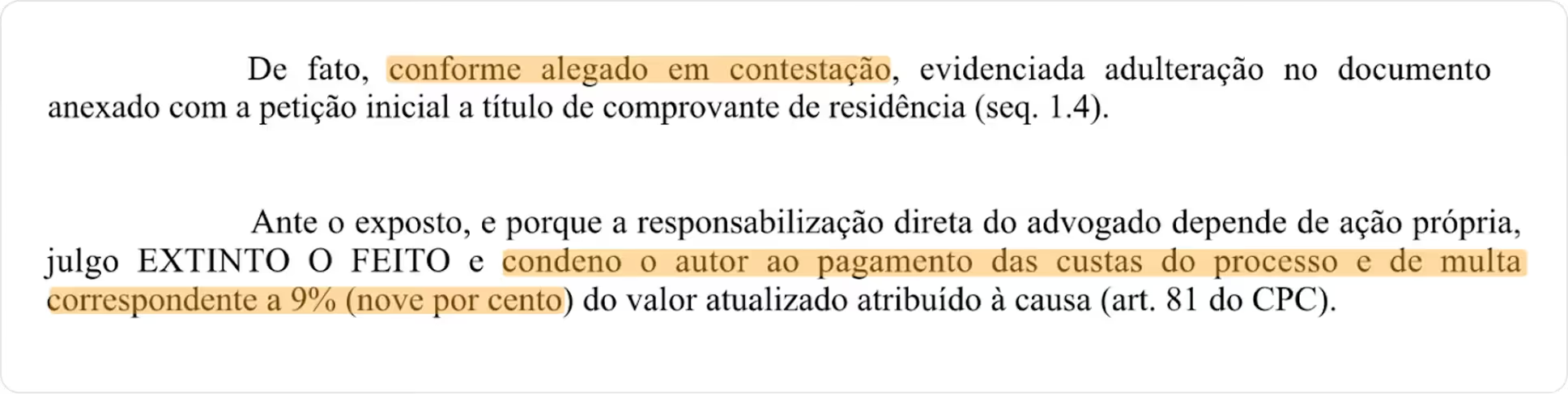
Serial fraud was uncovered through the reuse of the same receipt across dozens of lawsuits, with one case ending in dismissal of the lawsuit, a fine of 9% of the claim value against the plaintiff, and the opening of a criminal investigation into the conduct of the attorney
Challenge
01
Scale
In 2025, plaintiffs filed more than 365,000 lawsuits against Brazilian airlines. Aviation litigation grew by 32%, compared with 24% in financial services and just 1% in telecom.
LATAM was responsible for 42% of the record growth in the Brazilian airline market in 2025. That same year, the company faced more than 120,000 passenger-related lawsuits. Within the company, Brazil represents approximately 50% of group operations but generates more than 98% of consumer lawsuits, revealing an idiosyncrasy of the Brazilian judicial system when compared to other countries.
The high volume of cases required the legal department to operate with the same level of data analysis and operational discipline already present in other core areas of the company.
02
Document tampering and fraud
Beyond scale, LATAM faces fraud and other irregular practices in consumer lawsuits. Examples include:
- Tampered proof of address
- Power of attorney without a signature
- A plaintiff who had already died
- A disbarred attorney sponsoring the case
At high volume, this stops being an isolated problem. Catching it takes a recurring pattern detection that no one can do by hand. With AI, detecting evidence of wrongdoing strengthens the fight against abusive litigation and improves the evidence presented to the courts.
Solution
Enter was hired to mitigate the litigation costs of operating in Brazil. The solution was structured in four stages.
When a new lawsuit comes in, Enter’s AI agents gather every document in the case file and cross-reference it with the operational data of the flight involved.
From LATAM’s internal systems, it captures information tied to the flight and the passenger interaction, such as:
- Booking and ticket data
- Flights and passengers involved
- Assistance provided to each passenger
- Stated cause of delays or cancellations
Enter's engineering team processes data from different sources and formats, centralizing it into a single, dedicated LATAM database within the platform, which can include, for example, screenshots, documents, and even audio. The collected data is then used by the legal team and the company's law firms in the next stages of the flow.
Based on more than 30 irregularity checks, each lawsuit is assessed by Enter’s anti-fraud agent, built to detect illegal document tampering and abusive litigation practices. By organizing evidence and surfacing what actually happened at scale, Enter’s technology supports the justice system, sharpening the decisions of LATAM's legal team and the law firms representing the company in high-volume settings.
In a concrete example, the recurring reuse of the same proof of residence across dozens of lawsuits with different plaintiffs allowed LATAM to effectively expose the fraud.
Each lawsuit gets enriched with external and operational data relevant to the specific flight, made available by Enter's AI agents through integrations with databases built specifically for LATAM, including:
- Weather conditions
- Operating conditions at all airports in the country
- Evidence of disruptions affecting other airlines operating at the same airport on the same date
In practice, for example:
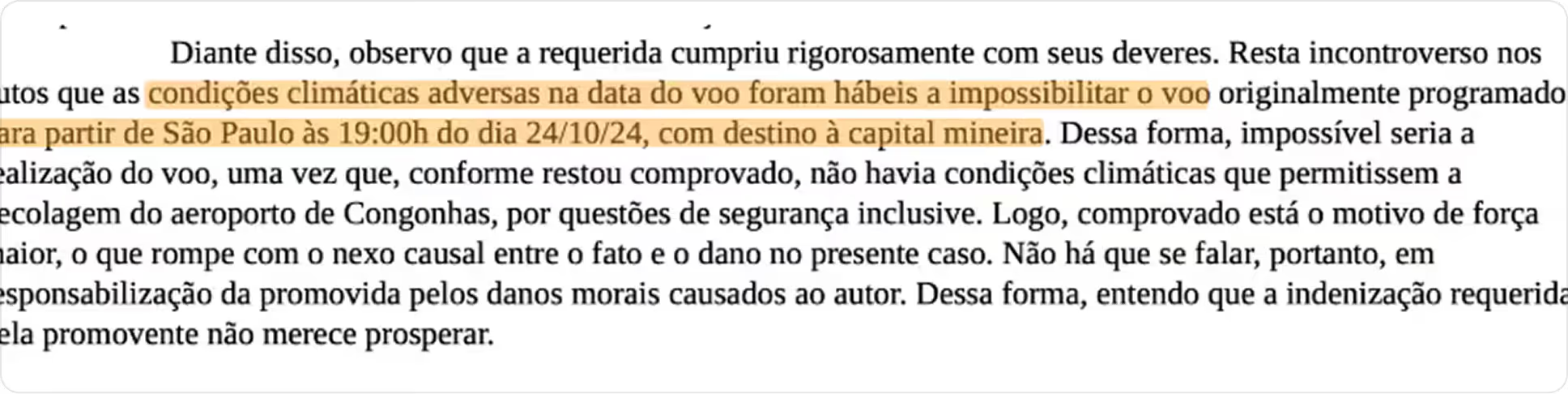
Based on this data, Enter’s AI agent determines whether the alleged event stemmed from factors outside the company’s control and, where applicable, provides legal inputs that support LATAM’s legal department and attorneys in arguments of fortuitous event, force majeure, or absence of liability.
Enter translates this reasoning into AI agents responsible for evaluating the specific facts of each case.
For example: In cases involving flights operated by partner airlines, where LATAM was not the operating carrier, Enter automatically identifies who was responsible and structures the answer based on lack of standing, demonstrating that LATAM had no control over the service.
After legal validation and guidance from LATAM's legal team, Enter suggests drafts within the conditions in which each one should be used, such as lack of standing, force majeure or provision of passenger assistance.
At the end of the workflow, the document must be reviewed by a licensed attorney, who validates the content and files the answer with the court.
Results
In under 12 months, LATAM expanded the portfolio supported by Enter's technology from 12% to 70% of its consumer litigation, after validating the results of the initial innovation project in practice.
“What started as an innovation project is quickly becoming the new operational standard for LATAM’s litigation.”
Over this period, Enter's technology supported 18,600 lawsuits, of which more than 8,000 have already closed under this operating model. The results were striking:
- +30% in operational efficiency metrics with support from Enter’s AI
- 13% reduction in operating costs per lawsuit
- US$2.8 million saved in the first year, even with the scope limited to 12% of the portfolio supported by Enter’s technology
“With Enter’s technology, we operate more efficiently, spend less per lawsuit, and sustain it at scale. At volumes like ours, small inefficiencies turn into structural losses; and in 2025, we cut those losses with Enter’s AI.”